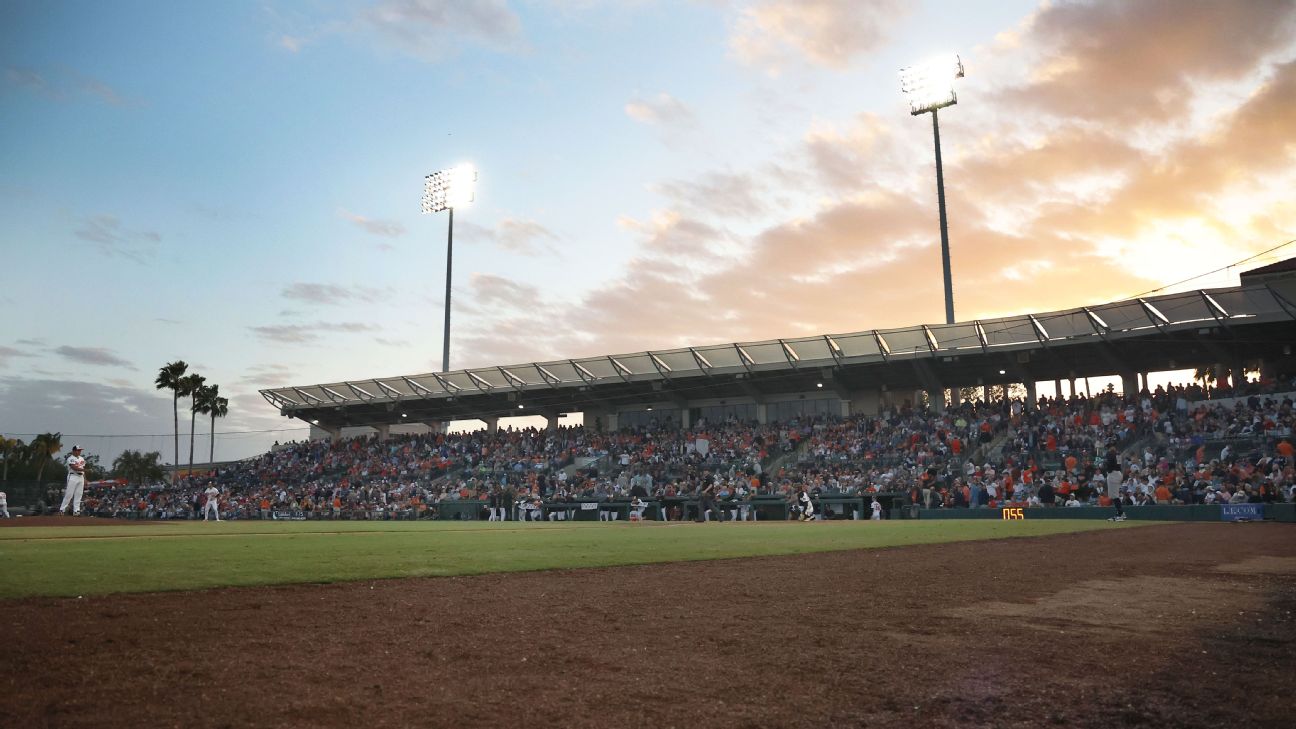
Spring training is wrapping up as MLB prepares for the earliest Opening Day in history | Photo: ESPN
With the World Baseball Classic in the rearview mirror and Opening Day just eight days away, spring training 2026 is entering its final stretch. Teams are locking in their rosters, naming Opening Day starters, and giving fans their first real look at how this season might unfold. Whether you're a seasoned bettor or just dipping your toes into MLB futures for the first time, here's everything our AI models are flagging as we count down to March 26.
Opening Day 2026: A Historic Start
The 2026 MLB season begins with an Opening Night matchup on Wednesday, March 25, when the Giants host the Yankees at Oracle Park in San Francisco. Max Fried will take the hill for New York in his fourth career Opening Day start, while Logan Webb gets the nod for San Francisco for the fifth straight year. It's an absolute showcase pitching matchup to kick things off.
Then on Thursday, March 26, a full 14-game slate drops for the earliest scheduled traditional Opening Day in MLB history. The marquee afternoon games include the Dodgers at Arizona and the Pirates at the Mets, both airing on NBC and Peacock. For the Dodgers, World Series MVP Yoshinobu Yamamoto will start his second consecutive Opening Day, stepping up after Blake Snell was placed on the injured list.
The Teams That Look Strongest Coming Out of Camp
FanGraphs released their pre-season power rankings this week, and the Dodgers sit alone at the top with a projected 100-62 record. That shouldn't surprise anyone. Los Angeles added Kyle Tucker to an already ridiculous lineup anchored by Shohei Ohtani, and they're chasing an unprecedented three-peat after winning back-to-back World Series titles. The betting market agrees: the Dodgers are +230 favorites to win the 2026 Fall Classic, implying roughly a 30% chance of making it three in a row.
Behind the Dodgers, the picture gets interesting. The Braves are projected for 91 wins, and Spencer Strider's progress through spring has been encouraging after his Tommy John surgery. The Mets made aggressive moves this offseason, adding Freddy Peralta and Luis Robert Jr. to a core built around Francisco Lindor, landing them at a projected 89 wins. The Mariners, fresh off their first AL West title in 24 years, are projected for 88 wins and remain the only active franchise without a World Series appearance.
Don't overlook the Tigers. Detroit paired Framber Valdez with ace Tarik Skubal, who's making his third consecutive Opening Day start. FanGraphs projects them for 87 wins, tied with the Phillies. If Skubal's dominant 2025 form carries over, this team could be a legitimate pennant contender.
Spring Training Standouts Your AI Models Love
Every spring produces breakout performances that hint at regular-season value. Here are the names our AI models have flagged after processing camp data through mid-March.
Prospect Performers to Watch
Henry Bolte (Athletics OF) - .375 avg, 1.094 OPS in 16 Cactus League games
Konnor Griffin (Pirates SS) - MLB's No. 1 prospect, leading Pittsburgh in RBIs
Matt McLain (Reds 2B) - Leading all of MLB in multiple offensive categories this spring
Bryson Stott (Phillies 2B) - .400 avg, 1.180 OPS in first 11 games
Pedro Ramirez (Cubs INF) - .364 avg, 1.111 OPS in 12 Cactus League games
Andrew Vaughn (Brewers 1B) - 13 balls at 100+ mph exit velo, .400/.471/.700 slash
On the pitching side, two arms have been especially impressive. Houston's Mike Burrows threw 12.2 scoreless innings with 15 strikeouts, potentially locking down a rotation spot. Detroit's Drew Anderson posted 11 scoreless innings with a 14-to-2 strikeout-to-walk ratio. If you're building season-long prop models, both of those names deserve a roster spot in your projections.
And then there's the Red Sox outfield: Braiden Ward set the all-time Grapefruit League record with 17 stolen bases in 18 attempts. For a Boston team that lacked speed last year, Ward's game-changing ability on the basepaths could quietly shift how the Red Sox play and how you model their run-scoring potential.
Where Our AI Sees Futures Value
If you're new to futures betting, this is one of the best times of year to place wagers. The market is flooded with information, and public money tends to pile onto the obvious favorites. That creates value on teams the public underestimates. Here's what our models suggest.
| Team | World Series Odds | FanGraphs Proj. Wins | AI Value Rating |
|---|---|---|---|
| Dodgers | +230 | 100 | Fair Price |
| Mariners | 12-1 | 88 | Slight Value |
| Tigers | 18-1 | 87 | Strong Value |
| Cubs | 18-1 | 86 | Strong Value |
| Blue Jays | 15-1 | 85 | Moderate Value |
| Red Sox | 16-1 | 84 | Moderate Value |
The Cubs at 18-1 stand out. Chicago added Alex Bregman this offseason, giving them a proven postseason performer in the middle of the lineup. FanGraphs projects them for 86 wins, and their young pitching core led by Shota Imanaga gives them a legitimate ceiling. If Pedro Ramirez's spring (.364, 1.111 OPS) translates to a regular-season roster spot, that's an extra boost the market hasn't fully priced in.
The Tigers at 18-1 are the other value play our models love. A Skubal-Valdez top of the rotation is among the best in baseball, and Detroit's offense showed real improvement in the second half of 2025. At nearly 20-to-1, the risk-reward is excellent for a team projected to win 87 games.
Key Offseason Moves Shaping the Season
For anyone still catching up on the offseason, here are the moves that reshaped the landscape and will directly impact how you should approach MLB betting in 2026.
The Dodgers added outfielder Kyle Tucker, making an already terrifying lineup arguably the deepest in modern baseball history. Pete Alonso signed with the Orioles, giving Baltimore a power bat to complement their young core. Dylan Cease landed with the Blue Jays, pairing with Kevin Gausman to form one of the American League's best one-two punches. And Brandon Nimmo was traded to the Mariners for Marcus Semien, giving Seattle the lineup consistency they lacked during their 2025 playoff run.
Every one of these moves shifts win projections and run-scoring models. If you're placing futures bets or building season-long prediction models, make sure your inputs reflect the new rosters, not last year's.
What Beginners Should Know Before Betting Opening Day
If this is your first MLB season placing bets, here are a few tips our AI models have reinforced across thousands of simulations.
First, spring training stats don't tell the whole story. Star players often coast through March, while fringe roster candidates play like their careers depend on it, because they do. Don't overreact to a prospect's .400 spring average or a starter's 6.00 ERA in camp.
Second, Opening Day lines tend to be sharper than you'd expect. Sportsbooks have had months to set these numbers, so finding value on the first day is harder than finding it in June or July when fatigue, injuries, and roster churn create inefficiencies.
Third, futures bets placed before Opening Day historically offer better prices than those placed during the season. If you believe in a team, now is the time to lock in their number. Once the season starts and they go 10-2 in April, those 18-1 odds disappear fast.
The Bottom Line: Eight Days and Counting
Spring training 2026 has given us plenty to work with. The Dodgers remain the clear favorites chasing history. The Mariners, Tigers, and Cubs are the value plays our AI models keep surfacing. The prospect pipeline across baseball looks as deep as it's been in years, with names like Konnor Griffin, Henry Bolte, and Matt McLain potentially making immediate impacts.
Opening Day on March 26 is the earliest in MLB history, and the storylines are stacked. Whether you're building AI prediction models or just picking a team to follow this season, the data from spring training has narrowed the field. Lock in your futures now, trust the process, and enjoy baseball being back.