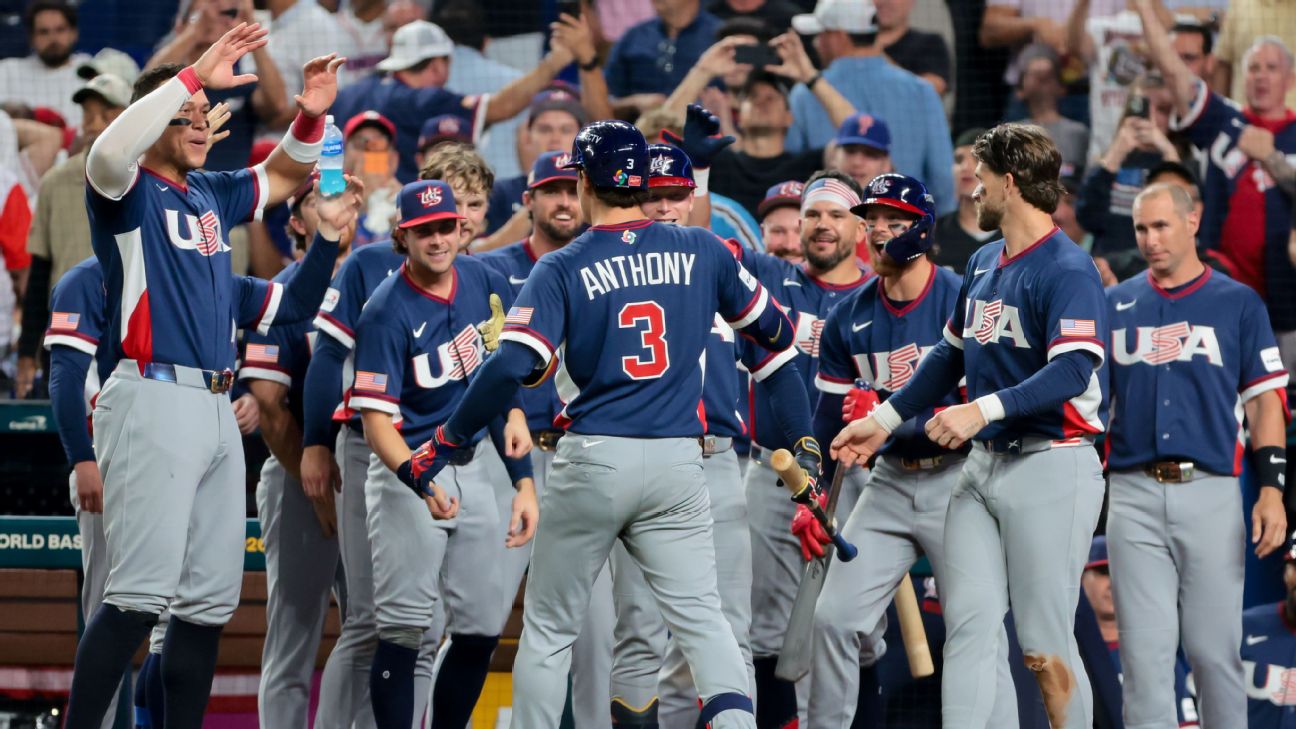
Every prediction model is only as good as its inputs. Change the inputs, and the outputs shift, sometimes dramatically. On Friday, Team USA yanked Clayton Kershaw from their World Baseball Classic roster and plugged in reliever Jeff Hoffman before Sunday's semifinal against the Dominican Republic. Across the country in Arizona, Diamondbacks catcher Gabriel Moreno got scratched from a spring training game with forearm tightness, and an MRI showed elbow inflammation. These two stories have nothing in common except for this: both force our AI prediction engine to tear up its old math and start over.
That process, the recalculation, is where the real analytical work lives. Here's how it plays out, and why it matters for anyone building 2026 MLB forecasts.
Clayton Kershaw, the three-time NL Cy Young Award winner who retired after 18 seasons with the Los Angeles Dodgers, came out of retirement specifically to represent Team USA in the 2026 WBC. A storybook moment. The kind of thing that makes international baseball feel bigger than regular season box scores. But Kershaw never actually pitched in any of Team USA's five games during the tournament. After the team's victory over Canada on Friday night punched their ticket to the semifinals, the roster move became official: Kershaw out, Jeff Hoffman in.
Hoffman, a 33-year-old reliever who posted a 9-7 record with a 4.37 ERA across 71 games for the Toronto Blue Jays in 2025, gives Team USA a practical bullpen arm for the elimination rounds. Kershaw will remain with the team through the rest of the tournament, but he won't be available to pitch. For a retired player who hadn't thrown competitively, this was always a realistic outcome. The coaching staff chose active, game-ready arms over the ceremonial value of carrying a future Hall of Famer.
This is where most people's understanding breaks down, so let's get specific. When a roster change like this happens, our models don't just swap one name for another on a spreadsheet. The swap triggers a cascade of recalculations across multiple connected variables, and the reason is straightforward: baseball prediction models don't evaluate rosters as lists of names. They evaluate rosters as collections of projected performance outcomes. Remove one set of projections, insert another, and the entire probability tree shifts.
Start with bullpen depth. Hoffman's 71-game workload in 2025 tells the system he's a high-leverage reliever who has been stretched across a full season. His 4.37 ERA is league-average, but the volume is significant. That's a durable arm. The model weights recent workload data heavily because it correlates with a pitcher's ability to perform in high-pressure, short-stint situations, which is exactly what a WBC semifinal demands.
Now here's a concrete example of what the recalculation actually looks like. Suppose the model had originally projected Kershaw, if used, to contribute roughly 3.2 innings of 3.80 ERA ball based on his pre-retirement baseline. That translates to an expected run allowance of about 1.35 runs in those innings. Replace Kershaw's profile with Hoffman's relief profile, a 4.37 ERA pitcher who typically works 1.0 to 1.2 innings per outing, and the model doesn't just recalculate Hoffman's slot. It redistributes innings across the entire bullpen. The projected run expectation for that segment might barely move, dropping to 1.28 runs, but the confidence interval tightens because Hoffman has recent, verifiable game data. The model trusts what it can measure.
The result? Team USA's win probability for the Dominican Republic semifinal actually ticks upward. Sounds counterintuitive. Swapping out a three-time Cy Young winner should hurt, right? But the AI doesn't care about legacy. It cares about who can get outs on Sunday. Kershaw's presence on the roster was essentially decorative since he never pitched. Replacing him with an active reliever who logged 71 games last season gives the bullpen more actionable depth.
This is one of the clearest lessons in AI-driven sports analysis: the model is ruthlessly objective. It evaluates current capability, not historical greatness. Reputation carries zero weight.
The Moreno situation carries weight that stretches well beyond the WBC and into 2026 regular season projections. The D-backs catcher was scratched from Friday's spring training lineup with right forearm tightness. An MRI revealed right elbow inflammation, and manager Torey Lovullo confirmed there's no structural damage. Moreno will be shut down for a couple of days.
"Shut down for a couple of days" in mid-March spring training is not a five-alarm fire. But here's what the AI picks up that a casual fan won't: the location of the inflammation matters enormously. Elbow issues in catchers are a yellow flag because of the repetitive stress that position puts on the throwing arm, the constant snap-throws to second base, the daily crouch-and-fire mechanics. The model doesn't just log "Moreno day-to-day" and move on. It cross-references the injury type against historical data for catchers with similar inflammation patterns during spring training and calculates the probability of recurrence during the regular season.
Think of it this way. The model has seen hundreds of catchers flag elbow inflammation in March. It knows what percentage of them ended up on the IL by June. It knows which ones played through it cleanly and which ones became chronic headaches. That historical pattern recognition is what separates a prediction engine from a box score reader.
For Arizona's 2026 outlook, Moreno is a critical piece. He's their everyday catcher and a key part of their offensive identity. If the model detects even a 15-20% increased probability of missed time during the season based on this spring flag, it adjusts the Diamondbacks' projected win total downward slightly. Not dramatically, because elbow inflammation with no structural damage is relatively minor. But the adjustment is real. Every fraction of a win matters when you're projecting playoff odds.
Most fans dismiss spring training injuries as noise. And honestly, a lot of them are. But AI prediction models treat them as early warning signals, data points that can shift season-long projections before a single regular season game is played. The difference between noise and signal isn't the injury itself. It's the context.
Was this a freak accident, or does it fit a pattern? Is the player's position one where this type of injury tends to linger? How did similar injuries in past spring trainings correlate with regular season availability? The model answers these questions in milliseconds and adjusts accordingly.
For the 2026 season, early spring training data is already shaping our team-by-team projections. The Kershaw swap doesn't directly impact any MLB team's regular season outlook since he's retired, but Hoffman's workload in the WBC becomes a variable for the Blue Jays' bullpen projections. If Hoffman throws 15 high-stress innings in the WBC, the model factors that additional arm mileage into its forecast for his regular season durability. That's not speculation. That's how arm fatigue compounds.
Moreno's elbow inflammation feeds directly into Arizona's 2026 projections. The model will monitor his return timeline, his spring training stats once he's back, and whether the forearm tightness or elbow issues resurface. Each new data point either confirms the initial concern or reduces the risk flag. The system is watching even when you aren't.
If you're building your own 2026 MLB forecasts, here's the practical takeaway: never ignore roster moves or spring training health flags, even the ones that seem minor. The best prediction models incorporate every available signal, from WBC roster swaps to a catcher being held out of a meaningless March exhibition game. The information that looks small in isolation can compound into significant projection shifts across a 162-game season.
The Kershaw-Hoffman swap is a clean illustration that AI values current readiness over reputation. Moreno's elbow inflammation shows that early health data is never truly meaningless when you have the historical context to interpret it. Both stories, separated by thousands of miles, are feeding into the same prediction engine. And that engine has already adjusted its view of what the 2026 season is going to look like.
The data never stops moving. Neither do the models. Stay sharp.